Pleasant Rose Flower Pot Redwork: A Designer’s Take
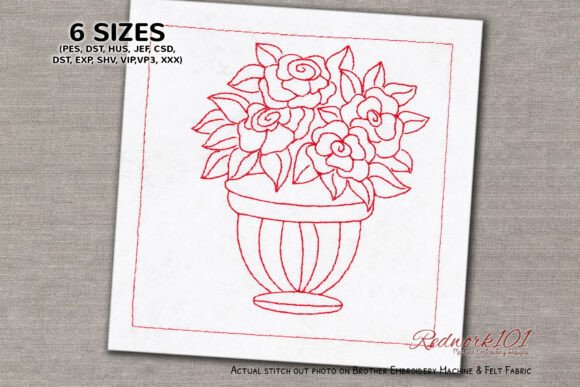
There’s a quiet confidence that comes with a classic redwork design, and the moment I opened Pleasant Rose Flower Pot Redwork, I felt it. This isn’t a loud, overly intricate file trying to prove itself. It’s a thoughtful, balanced composition of a flower pot brimming with roses, drawn with the kind of clean linework that makes you want to stitch it immediately. The mood is nostalgic without feeling dated — think vintage botanical prints meets modern handmade warmth. For anyone who sells embroidered kitchen linens, floral wall art, or personalized apparel, this design instantly suggests at least a dozen finished products. It belongs in the Bouquets Bunches family of designs, and as an Embroidery file, it’s built from the ground up for stitched storytelling, not just screen viewing.
I ran my first test with a specific project in mind: a set of natural linen tote bags I was prepping for a small boutique’s spring collection. The shop owner wanted something delicate but not fragile, a floral that felt like it could live on a market bag heading to the farmer’s market. Pleasant Rose Flower Pot Redwork turned out to be the perfect match. Stitched in a traditional red cotton thread on oatmeal linen, the rose blooms held their shape beautifully, and the flower pot outline gave the whole piece a grounded, almost illustrated presence. Customers later told me they assumed the bag was hand-embroidered; that’s the kind of gentle line quality this redwork design delivers.
First Look: Why This Redwork Feels Different
Many redwork designs lean too heavy on internal details, creating bulky stitching that puckers lightweight fabrics. Pleasant Rose Flower Pot Redwork avoids that entirely. The rose heads are stylized just enough — recognizable bloom shapes, a few curled leaves, a softly curved pot — without cramming in unnecessary fill. The layout is vertical, so it works naturally on apron bibs, pillow covers, or the center back of a denim jacket. At first glance, I knew I’d use it for more than tea towels. The visual personality is approachable, not formal, which means it plays well with baby items, casual totes, even a simple sweatshirt embroidery for a floral streetwear line.
The design is offered in six sizes, a detail I appreciated as I scaled it for different hoop limitations. On my single-needle machine, I loaded the smallest version for a baby onesie accent, and the medium for a zip pouch. The design scaled cleanly — no broken connecting lines, no distorted thin stems. That flexibility makes it a strong candidate for craft business owners who sell coordinated product sets: think matching mom-and-child aprons, or a trio of tea towels in graduated sizes.
Real Project Performance Across Different Fabrics
I stitched Pleasant Rose Flower Pot Redwork on five different base materials to see how it really holds up outside the hoop. On quilting cotton, it was crisp and fast; the running stitches laid flat and the thread sheen gave the roses a subtle liveliness. On a cotton-linen blend pillow cover, the design looked almost hand-drawn, with a slightly textured finish that added to its charm. When I moved to a mid-weight sweatshirt — something I do for custom apparel orders — I used a medium cutaway stabilizer and adjusted my thread tension slightly. The result? A beautifully even redwork piece that felt integrated into the fabric, not sitting on top.
The bigger surprise was on a knit baby blanket. I normally avoid redwork on stretchy surfaces, but with a fusible mesh stabilizer and careful hooping, the flower pot stitched out without distortion. The key here is to avoid pulling the fabric taut; let the stabilizer do the work. On a canvas tote bag, thick and unyielding, the design needed a sharp needle and slower machine speed, but the final look was worth it — prominent, professional, and undeniably giftable.
- Tea towels and table linens: The natural home for this design. Stick to smooth-weave cotton or linen for the cleanest redwork results.
- Tote bags: Excellent. Medium to large size works best, placed off-center or full-front.
- Baby clothing and accessories: The small sizes shine here. Use blue or pink thread for a subtle nursery twist, or keep it red for a classic onesie.
- Sweatshirts and hoodies: Viable, but test stitch density on scrap first. Redwork on fleece can lose definition if the pile is high.
- Pillow covers and aprons: High-impact, low-risk applications. A single motif centered on a linen pillow becomes a boutique product instantly.
- Caps and curved brims: Proceed with caution. The narrow pot base might wrap awkwardly. I’d stick to the smallest size and use a cap hoop.
Where to Pause Before Pushing Start
For all its charm, Pleasant Rose Flower Pot Redwork isn’t a universal throw-on-anything design. That’s not a flaw; it’s the nature of open linework embroidery. Stretchy ribbed knits will fight you — the running stitch doesn’t have enough coverage to disguise wavy edges. Unless you’re doubling the design as an appliqué base, avoid ribbed cuffs and collars. Very thin fabrics like voile or sheer curtains can struggle, too. The needle perforations might show around the stems, and lighter stabilizers can still leave a shadow. On dark fabrics — charcoal, navy, black — the redwork pops beautifully, but thread color contrast becomes critical. A deep burgundy disappears into black; a bright tomato red can look harsh. I keep a thread chart and test swatches before committing to customer orders on dark ground.
Densely stitched areas aren’t a concern here because this redwork stays true to its outline heritage. There’s no satin stitch block to cause stiffness. But the narrow connections between leaves and the pot rim are worth inspecting in your software before stitching at high speed. If your machine tends to clip short stitches, you might want to slightly enlarge those nodes manually. I didn’t have issues on my machine, but it’s a habit I recommend.
For frequent washing — kitchen towels, baby bibs — the redwork holds up well if you secure thread tails and avoid fabric softeners that can degrade thread sheen. I’ve washed my test towel four times now, and the design remains crisp, no unraveling, no color bleed.
Design Mojo: What It Does for Your Finished Products
When I add a design like this to my product lineup, I’m thinking beyond “pretty.” Pleasant Rose Flower Pot Redwork influences how a customer perceives the entire brand. It signals care. A redwork rose on a kitchen towel doesn’t scream mass-produced — it whispers handmade heritage. For Etsy sellers and craft fair sellers, that perception shift can mean the difference between a $12 towel and a $28 heirloom piece. The floral theme, rooted in the Bouquets Bunches category, instantly connects with buyers looking for garden-inspired gifts, Mother’s Day items, or cottagecore aesthetics.
Stitching clarity is excellent on even-weave fabrics. The open areas inside the roses let the background fabric breathe, so your product doesn’t feel “plastic.” Customer trust grows when the embroidery looks integrated, not glued-on. And from a branding angle, the design is distinct enough to become a signature motif. I can see it on hang tags, packaging inserts, or even printed mockup pages. It photographs beautifully because the red thread catches light without overwhelming the camera.
Giftability is strong. A pot of roses is universally understood, not culturally specific, and not overly romantic. It suits wedding gifts, housewarming presents, new baby congratulations, or just a thoughtful hostess gift. That broad appeal matters when you’re building inventory for multiple sales channels.
Practical Designer Notes for Serious Makers
Before you list a finished item or stitch a dozen for your next market, do the homework. Every digitized file behaves differently depending on your machine, thread brand, and stabilizer combo. Here’s what I check:
- Test on scrap fabric first. Even a small swatch reveals thread tension issues, needle suitability, and the true stitch count feel.
- Check thread color contrast. The beauty of redwork is its simplicity, but a harsh red against an off-white background can look clinical. I often use a slightly muted brick red or a vintage cherry tone for softer appeal.
- Review stitch density. While this design uses running stitches primarily, some curve segments might feel dense if the digitizer tightened them. Run a sample to see if the fabric pulls.
- Confirm hoop size. Know the exact dimensions of each of the six provided sizes, and don’t assume the design fits your standard hoop. Measure the stitch area, not the file boundary.
- Inspect small details on screen. Zoom into the rose centers and leaf tips in your embroidery software. Look for any overlapping lines that could create unintended bulk.
- Test in black and white mockups. A monochrome preview helps you see if the design holds up as a silhouette, important if someone orders it in a non-red thread.
- Compare light and dark fabric backgrounds. The same design stitched on white muslin versus charcoal denim tells two different stories. Know both.
- Use proper stabilizer. Lightweight tear-away for stable wovens, medium cutaway for knits, and fusible mesh for thin or unstable fabrics.
- Check commercial viability. Confirm the license terms. If you plan to sell finished towels, apparel, or digital mockups featuring Pleasant Rose Flower Pot Redwork, make sure the usage rights cover commercial embroidery projects. Most design houses provide clear terms; always verify before you scale.
- Document your process. Note which thread brand, needle type, and stabilizer worked best. That notebook becomes a goldmine when you reproduce orders.
The Boutique Tote Reality Check
Remember those linen tote bags I mentioned earlier? After a full batch of twelve, I learned that the medium size of Pleasant Rose Flower Pot Redwork needed a slightly heavier stabilizer on the linen because of its slub texture. The first two had minor tunneling around the pot base. A quick switch to a soft mesh cutaway solved it. The client was thrilled, and I’ve since added the design to four more product listings: a flour sack towel set, a linen apron, a zipper pouch, and a baby girl’s dress bodice. Each time, I adjust thread color slightly — dusty rose for the baby dress, classic cherry for the apron — but the design remains the quiet hero.
What’s telling is how often customers ask, “Is this hand-embroidered?” That’s a compliment to the redwork tradition and this particular file’s clean digitizing. It doesn’t overpromise or underdeliver. In a market flooded with dense fills and metallic thread gimmicks, Pleasant Rose Flower Pot Redwork feels like a return to stitches that matter. It’s a versatile, honest design asset that I’d recommend for anyone building a handmade product line around florals, gifts, or home decor.