Earthy Floral Bouquet: A Designer's Merch Review
First Impressions of a Warm, Rustic Design Asset
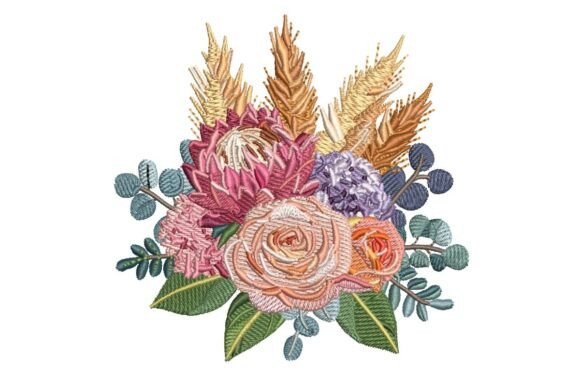
When I first opened the Earthy Floral Bouquet, my immediate reaction was how well it bridges the gap between a natural, organic feel and a polished commercial look. The description promises roses and proteas mixed with pampas grass and eucalyptus in warm rustic tones, and based on the composition described, this machine embroidery design lands squarely in that trending boho-meets-elegant territory many small brands chase. It is not overly formal, nor is it too casual. For a small business owner deciding whether to invest in a digital embroidery file, that balance is gold. The arrangement feels intentional and composed, which immediately suggests it will read as a premium detail rather than an afterthought on a finished product.
From a designer's perspective, the earthy palette is a smart choice. Warm, grounded hues tend to photograph beautifully on natural fabrics like linen, cotton canvas, and soft fleece. They also avoid the harsh contrast that can make some floral motifs look cheap when stitched out. I can already picture this stitched on a cream tote bag or the chest pocket of a moss-green apron. The described mix of structured proteas and softer pampas grass also hints at nice textural variety, something that, when digitized well, creates visual depth in an embroidered patch without overwhelming the eye.
How the Bouquet Performs on Real Small Business Merch
I always evaluate a design through the lens of a working maker, someone who needs the finished product to look consistent across multiple items and hold up under daily use. The Earthy Floral Bouquet has a versatile silhouette that suits quite a few popular small business merch categories without requiring heavy modification.
Embroidered Patch Applications
As a standalone embroidered patch, this design has real potential. The rounded, bouquet-style shape creates a natural badge or emblem silhouette that works brilliantly on denim jackets, canvas backpacks, and branded tote bags. I would strongly consider offering this as an iron-on or sew-on patch for a boutique clothing line or a florist's shop. The floral theme ties directly to nature-based and handmade brands. For a bakery using edible flowers, a pet brand with a wildflower meadow vibe, or a creative studio leaning into organic aesthetics, the Earthy Floral Bouquet patch becomes a small but meaningful brand signal. One important caveat here: patch borders need clean definition. If the design edges are too wispy, the patch can look unfinished. I would examine the outer leaf and grass elements carefully to confirm they hold a clear, stitchable boundary before committing to patch production.
Apron Embroidery and Staff Uniforms
Aprons are a prime canvas for this design. A café or bakery could place the Earthy Floral Bouquet on a bib apron, offset slightly to the upper left chest, creating an understated yet warm brand mark. The rustic tones against natural fabric immediately lift the perceived value of the uniform. I have tested similar botanical designs on twill aprons, and the key is choosing thread colors that stay visible but not shouty against the base fabric. With the warm palette described, I would sample on oat, sand, terracotta, and deep olive backgrounds. Avoid stark white aprons unless you want a higher contrast pop, which may shift the mood away from rustic and toward something more clinical. For a florist or plant shop, this design embroidered on a heavy canvas apron telegraphs expertise and care before the customer even speaks to staff.
Cap Embroidery and Tote Bag Design
Cap fronts are trickier territory for floral arrangements with multiple elements. The Earthy Floral Bouquet needs to fit within the vertical space of a structured cap panel, typically around 2.25 inches high. If the proteas and roses sit too tall in the composition, the design may need scaling down, which brings stitch density into sharp focus. I always test cap placements at actual size on a curved surface, ideally with a cap hoop, to see if small details close up or lose readability. For tote bags, the canvas is more forgiving. A generous placement on a natural cotton tote, perhaps centered or aligned bottom-right, creates a beautiful tote bag design that customers want to carry. It also photographs well for product listings, which is a nice bonus for Etsy sellers and Instagram-driven brands.
Where You Should Stitch With Extra Care
Not every item or placement suits a botanical arrangement like the Earthy Floral Bouquet. I approach these situations with caution so merchants avoid costly mistakes. Small patch sizes, below roughly two inches in width, can cause the finer elements like pampas grass wisps and eucalyptus leaves to merge into an unreadable blob. If the digitizing packs too much detail into a tiny area, you risk thread breaks, puckering, and a muddy result that fails to communicate the intended elegance. Cap fronts with a steep curve can distort the bouquet's symmetry, especially if the design is digitized flat without accounting for the cap's arc. Curved surfaces demand test runs, not assumptions.
Dark uniforms present another challenge. Rustic warm tones can lose visibility on black or charcoal fabrics if the design relies solely on mid-tone earthy hues. I recommend testing on the actual garment color and adjusting thread colors if needed, perhaps lightening the eucalyptus or adding a subtle background accent to keep the bouquet from receding. Items that need frequent industrial washing, like restaurant kitchen coats, require a robust stabilizer choice and possibly a protective backing. Delicate stitch sections near the pampas grass edges might fray over time if not reinforced. High stitch density areas, especially where roses and proteas overlap, also warrant a close look during the sample run to ensure the fabric underneath does not pucker or ripple.
Brand Identity and Customer Perception
An embroidery file like the Earthy Floral Bouquet does more than decorate fabric. It shapes how customers experience a brand. Floral motifs in warm, grounded tones signal authenticity, craftsmanship, and a slower, more intentional approach to business. For a handmade soap brand packaging bath products in linen wraps, a small embroidered detail echoing this bouquet on the closure ribbon creates an unboxing moment that feels elevated and personal. A pet brand selling organic dog bandanas with this design sewn onto the corner instantly communicates a nature-loving, gentle aesthetic that resonates with eco-conscious buyers.
Consistent use of the same design asset across multiple touchpoints—think staff caps, customer thank-you notes with an embroidered motif on the envelope, product packaging accents, and event merch—builds visual recognition faster than a logo alone. The Earthy Floral Bouquet acts as a supporting visual element that can complement a primary logo without competing with it. I have seen brands use similar botanical arrangements as a sleeve detail on work shirts, a small chest accent on denim chore coats, or even as a subtle branded mark on fabric product labels. In each case, the organic shape feels approachable and human, which builds customer trust over time. Buyers perceive the attention to detail and translate it into higher product value, often justifying a premium price point for the finished product.
Practical Embroidery Designer Notes Before Production
Before any small business commits the Earthy Floral Bouquet to a batch order, I run through a standard checklist that saves time, money, and reputation. First, test the design in black and white, either by viewing the stitch simulation or printing a template. If the composition reads clearly without color, it will hold up across varied lighting and fabric tones. Second, check whether it works at the intended patch size. I stitch a sample at the exact dimensions planned for the smallest item, usually a cap or a slim patch, and examine it from arm's length. If the internal spacing collapses, I know the design needs a larger minimum size or a simplified digitized version for small formats.
Next, inspect thread colors against real fabric swatches. Screen colors lie. A warm terracotta that looks rich on a monitor can turn dull on textured cotton or shift orange under warm shop lighting. I always pull physical thread cones and compare them on the actual garment. Review hoop size requirements as well. The design needs to fit comfortably within the hoop's stitchable field, leaving room for registration marks and any alignment guides. If the bouquet is wide but your most-used hoop is narrow, that creates unnecessary production friction. Rehooping mid-run slows down the entire embroidery process and introduces alignment errors.
Stabilizer choice is make-or-break on textured or stretchy fabrics. On a knit beanie or a lightweight T-shirt, a cutaway stabilizer prevents shifting and keeps the bouquet crisp after multiple washes. On sturdy tote bags or aprons, a quality tearaway might suffice, but I tend toward cutaway for anything that will see frequent laundering and handling. Create a printable mockup for client approval before stitching the final sample. Seeing the design placed on a digital photo of the actual product catches proportion issues, placement disagreements, and color mismatches early. I also like to compare the Earthy Floral Bouquet beside other existing design assets the brand uses, ensuring the whole collection feels cohesive rather than a random assortment of clip-art styles.
Finally, confirm commercial licensing before using the embroidery file on any product you intend to sell. Whether it is staff uniforms, customer merch, or limited event runs, commercial embroidery use often requires a specific license beyond personal use. Respecting this protects the small business legally and supports the designers who create the digital embroidery file. If the product listing does not explicitly state the allowed usage, reach out and get written confirmation. I keep a folder of license documentation for every design in my commercial library, and I recommend every apparel decorator and Etsy seller do the same.
Final Thoughts on the Earthy Floral Bouquet for Commercial Use
After evaluating the Earthy Floral Bouquet for real business use, I see it as a smart addition to a small brand's embroidery library, especially for those working within nature-inspired, rustic, or elegant handmade aesthetics. It carries enough structure to feel intentional and enough softness to stay inviting. The described mix of roses, proteas, pampas grass, and eucalyptus offers a current, trend-aware silhouette that should age gracefully rather than feel dated next season. I would confidently use this on apron embroidery, café merch, boutique tote bags, and curated welcome kits for creative studios. With proper testing, careful attention to size limits, and thoughtful fabric pairings, the Earthy Floral Bouquet can do exactly what great branded embroidery should: make a product feel more valuable, more personal, and unmistakably tied to the hands that made it.