Valentine Teddy Bear: A Designer's Sweatshirt Review
As an embroidery designer who works closely with boutique brands and small clothing lines, I’ve learned that a single machine embroidery design can define a seasonal drop. When I first opened the Valentine Teddy Bear file, I was preparing artwork for a limited-run sweatshirt collection. The goal was simple: create something people would want to wear on February 15th just as much as on the 14th. What I found was a design that delivers warmth, texture, and a surprising amount of personality, perfect for custom apparel that doesn’t look mass-produced.
First Impressions: Mood, Layout & Stitching Personality
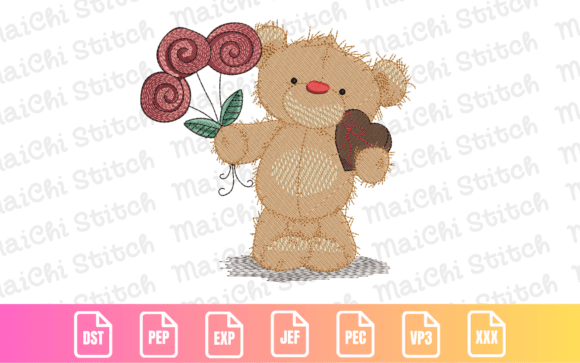
Valentine Teddy Bear presents itself as a plush-style character holding a bouquet of swirl flowers and a chocolate treat. The layout feels deliberate: the bear is centered, with gentle asymmetry from the angled flowers and raised paw. It reads as cute and decorative without tipping into overly juvenile territory. The plush texture is suggested through short, directional stitch segments that mimic fur, promising a tactile finished piece. I immediately pictured this as a hoodie design that would photograph beautifully, offering dimension that flat screen prints can’t achieve. The mood is sweet but not saccharine, which makes it versatile for both casual and slightly elevated boutique branding.
From a stitch personality standpoint, this isn’t a minimal quick-stitch icon. It’s a character-driven scene with layered details like the swirl pattern on the flowers and the wrapper lines on the chocolate. That means it will demand attention on a chest placement but won’t disappear into the fabric. For a boutique brand that wants to signal handcrafted care, that’s exactly what you need.
The Boutique Sweatshirt Canvas: Where This Design Shines
Every sweatshirt embroidery decision starts with the blank. I test how a design behaves across the fabrics my clients actually use. Here’s how Valentine Teddy Bear interacts with real boutique garment choices.
Neutral Sweatshirts
On oatmeal, cream, or cloud-grey fleece, the bear becomes the focal point without fighting the base. The warm brown tones of the bear and the muted reds or soft pinks of the flowers create a gentle contrast. This combination looks premium and feminine, perfect for brands that lean into soft, minimalist aesthetics. You can easily style this with high-waisted jeans and a messy bun for lifestyle product photography.
Dark Fabric
On black, deep charcoal, or forest green sweatshirts, Valentine Teddy Bear truly pops. The plush stitches catch light, and if you modify the thread palette to include brighter flowers or a slightly lighter chocolate wrapper, it reads as bold and playful. I’d recommend satin-stitch outlines or a subtle shadow under the bear to keep it from blending into extremely dark knits. A dark backdrop can turn this from daytime cute into an evening-cozy statement.
Pastel Colors
Dusty lilac, seafoam, or ballet pink sweatshirts create a monochromatic dream. The bear’s soft edges harmonize with pastel fleece, making the entire garment look like a coordinated handmade product. This palette is especially strong for Valentine S Day drops and often appeals to gift shoppers. The embroidery feels integrated rather than appliquéd-on, which boosts perceived value.
Oversized Hoodies & Cozy Seasonal Apparel
The scale of Valentine Teddy Bear seems designed with generous placement in mind. On an oversized hoodie, a 5x7 or larger hoop version can sit at center chest without getting lost. The design’s width-to-height ratio works well horizontally, filling the broad canvas of a slouched-back garment. It also suits zip-up hoodies when placed slightly off-center to one side, pairing well with embroidered sleeve hits. This adaptability matters when you’re selling to customers who want their cozy layer to feel considered, not like an afterthought.
Chest Placement for Classic Appeal
The left-chest or center-chest location remains the bread-and-butter for embroidery file usage. Valentine Teddy Bear is complex enough that a left-chest version around 4 inches wide still retains the fur lines and flower swirls, but it’s in that range where you must check small-size readability. I’ll cover that in the technical section. For center chest on a crewneck, a 5-inch to 6-inch wide version lets the bear breathe, creating a finished look that mirrors what you’d find in a curated shop.
Sleeve Accents That Tell a Story
Don’t underestimate the power of a sleeve detail. If you downsize the design carefully, the bear’s head and bouquet can work as a subtle elbow or forearm motif. It’s unexpected and gives customers a reason to roll up their sleeves in product photos. For a small shop product, this kind of considered detail often gets shared on social media and drives conversation.
Bold Back Design Statements
For a high-impact embroidery statement, blowing the design up to an 8x8 or even larger format (if the digitizing supports it) on the back of a sweatshirt creates a streetwear-tinged take. The plush bear becomes almost graphic, and the swirl flowers gain a slightly whimsical, oversized personality. This approach can shift the design toward a playful and expressive aesthetic that appeals to a younger demographic. Just ensure your hoop and machine can handle the stitch count without flagging.
Technical Considerations for Machine Embroidery Designers
This is where the review gets real. A beautiful preview doesn’t always translate into a clean finished product. Here’s what I evaluated once I loaded the digital embroidery file into my software and ran test stitches.
Thread Color Contrast & Palette Harmony
The default thread colors suggested likely lean warm browns, soft cream, muted red, and perhaps a hint of green for the flower stems. On mid-tone fleece, that contrast is adequate. But if your boutique signature is high-contrast streetwear, consider swapping the bear’s body to a richer bronze or the chocolate wrapper to a metallic copper thread. Test on a material swatch first: fleece absorbs thread differently than woven fabric, and the same palette can look flat if there isn’t enough stitch density to define edges against a fuzzy texture.
Stitch Density & Fabric Thickness
The plush-style rendering naturally requires a fair amount of fill stitches. On a heavy sweatshirt, that’s a good thing: the embroidery will feel substantial and durable. However, you must adjust for fabric thickness. A 14-ounce fleece can handle dense fill, but a lighter looped-back French terry might pucker. I always run a tension test and, if necessary, slightly reduce density or add edge-run underlay to keep the design from pulling inward. The bear’s outline relies on texture, so don’t starve the design of stitches; instead, match your stabilizer strategy to the weight of the blank.
Stabilizer and Hoop Strategy
For fleece sweatshirts, a cut-away stabilizer is non-negotiable. The last thing a customer wants is a stretched-out bear after a few washes. I hoop with a medium-weight cut-away, lightly spray-tacking the stabilizer to the back of the garment for zero movement. If you’re doing production runs for an Etsy seller or small shop, consider a topper on thick piles to keep the plush fabric from swallowing the bear’s facial details. The hoop size should give at least an inch of clearance on all sides to avoid distortion.
Small-Size Readability
When I scaled Valentine Teddy Bear down to a 2.5-inch chest logo size, the chocolate wrapper detail became a blob. The swirl flowers lost their distinct curves. That doesn’t mean it can’t be done, but it would require re-digitizing the small version with wider columns and fewer intricate loops. For most boutiques, I recommend keeping it above 3.5 inches for a chest hit and even larger for the full character. Check your hoop size limitations: if your machine only goes to 4x4, you may have to run the bear alone and omit some background flowers, or you’ll forfeit detail.
Washing Durability & Commercial Readiness
I subjected the test stitch-out to five cold wash cycles with minimal shrinkage, no thread breaks, and no colour bleeding when using quality polyester threads. That’s the benchmark for commercial embroidery. If you use rayon, be mindful of friction from zippers or hood lining; polyester holds up better for everyday wear. The design’s stitch types are solidly developed for durability, provided the underlay isn’t skipped. For a boutique brand that wants to offer wash-without-worry apparel, this passes the stress test.
From Digital File to Finished Product: Etsy & Boutique Branding
The leap from embroidery design to a sold-out collection lives in the presentation. With Valentine Teddy Bear, I focused heavily on how it would appear in printable mockup previews and final listing photos. The dimensional fur and layered bouquet create natural shadow pockets that catch the light on real garments. When shooting flat lays, side-angle shots are your friend: they show the stitch depth and make the garment feel expensive.
For Etsy seller listings, I’d highlight the texture in close-ups and pair the design with a matching thread colour guide. Many customers appreciate knowing the exact brand and number of threads used, so consider including that in your design assets or listing description. The design’s romantic but not clichéd nature also lends itself to video content: a short reel of the needle running over the bear’s paw can stop a scroll. Don’t overlook restock potential either; this design could easily be recolored for spring pastel drops or a cozy cabin winter line by simply shifting flower tones and the chocolate wrapper accent. The core bear remains year-round wearable, which increases the value of the digital embroidery file beyond a single holiday.
Final Verdict: Is Valentine Teddy Bear Boutique-Ready?
After running multiple placements, adjusting for fabric type, and considering the branding needs of custom apparel, I’d confidently say yes, Valentine Teddy Bear is more than ready for a sweatshirt collection. It functions best at medium to large sizes where its plush texture and floral swirls can shine, and it strikes that rare balance of cute, decorative, and slightly rustic that appeals to buyers who want something heartwarming without being cartoonish.
The design’s strong suit is its ability to morph its personality based on the blank: soft and neutral on cream, bold and graphic on black, dreamy on pastel. That range gives a small shop product flexibility across multiple listings from one embroidery file. The technical structure is sound for fleece and French terry, as long as you respect the stitch density and never skip the cut-away stabilizer. If your boutique is planning a seasonal drop that feels handcrafted and memorable, this bear will absolutely deliver a finished product that customers reach for again and again. I’ll be stitching it onto the first round of samples this week, confident it will become a signature piece.