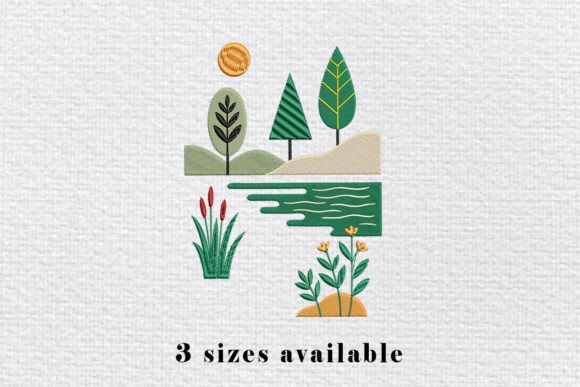
Minimal Landscape Embroidery Design Review
As an embroidery designer who digitises for small apparel brands, merch drops and handmade product lines, I look at hundreds of machine embroidery design files each season. When I opened Minimal Landscape Embroidery Design, I immediately saw a versatile asset that could live comfortably on a tote bag, a café apron, a sleeve patch or a cap front—if used with intention. This isn’t a generic nature motif. It’s a restrained, modern composition of hills, trees, flowers and a sunny lake that speaks a calm, contemporary language. For a boutique, a creative studio or a florist who wants their embroidered patch to whisper quality instead of shouting, this embroidery file has serious potential.
First Impressions: Clean Lines, Calm Vibe
Right away, the design feels purposeful. There’s no clutter. The hills undulate with a soft rhythm, the trees sit with intentional spacing, the flowers are dots of detail and the sunny lake acts as an anchor for the whole scene. In the Forest Trees category, you often expect dense, rustic or highly textured designs. This one breaks that mould. It leans into a minimalist, almost architectural take on landscape embroidery. That matters for small business merch because it shifts the design away from DIY craft table and toward finished product shelf. I could see this on a brand’s label, a uniform accent or a customer gift bag without losing professional polish.
The artistic modern edge also makes Minimal Landscape Embroidery Design highly adaptable. It doesn’t lock you into one season or style. Pair it with neutral thread colors for a linen tote bag, or go bold on a black cap. The calm character of the design lets your brand identity breathe, rather than the embroidery file forcing a mood that might not match your visual assets.
Where This Design Shines in Small Business Merch
I test every commercial embroidery file by imagining it on real products that small business owners actually order. Here’s where Minimal Landscape Embroidery Design works hardest.
- Chest logo accents on work shirts or polos. For a florist, a pet brand or a bakery, a 2.5‑inch embroidered patch on the left chest adds warmth without being infantile. The landscape reads as a signature, not a label.
- Cap embroidery. A simplified version of the design—maybe just the hills and sun—sits nicely on the front panel of a structured cap. The low‑profile tree silhouettes translate well onto curved surfaces if you adjust placement.
- Apron embroidery. A full‑scene minimal landscape across the bib of a café apron, stitched in tonal threads, gives staff a handcrafted, premium look. I’ve done similar layouts for coffee shops that want their uniform to feel intentional, not corporate.
- Tote bag focal points. Canvas tote bags love a medallion‑style embroidered patch. This design, enlarged to 4 inches wide, becomes the hero of a reusable bag—turning a utility item into a boutique product that customers carry everywhere.
- Hang tags and product packaging accents. Stitch it onto small fabric scraps to use as gift wrap toppers or sew‑on tags. It’s a subtle, repeatable brand mark that builds recognition without needing a logo.
- Handmade brand merchandise bundles. Pair a shirt or pouch with Minimal Landscape Embroidery Design alongside seed packets or nature‑inspired goods. The embroidery file becomes part of a cohesive story that buyers respond to emotionally.
In each case, the design’s strength is its silence. It doesn’t compete with your brand voice. It elevates a finished product by adding visual texture, light depth and a sense of place.
Size Sensitivity and Detail Retention
Landscape embroidery designs often contain multiple small elements. Here, the trees, flowers and the sun’s shimmer on the lake rely on clean separation. At embroidery patch sizes below 2 inches wide, you risk losing those distinct shapes. I always test a digital embroidery file at the smallest intended size first. If your brand needs tiny shirt labels or micro‑patches, be prepared to simplify—maybe just the hill line and sun. Use a printable mockup at 100% scale to check visual clarity before threading a needle.
Curved Surfaces and Cap Fronts
Cap embroidery with a horizontal landscape can be tricky. The bill curve distorts straight lines, making a flat lake look skewed. I recommend rotating the design slightly or selecting only the upper portion (trees and sun) for caps. Hoop the cap firmly, use a low‑profile stabilizer and stitch slowly. The calm personality of the design survives these adjustments well because the organic elements mask minor misalignment better than rigid geometry would.
Dark Fabrics and Thread Color Contrast
A sunny lake and airy hills can vanish on dark garment backgrounds if thread colors aren’t reversed. If your brand uses charcoal or navy uniforms, test the embroidery file against that fabric early. Sometimes just shifting the thread colors from pastel to warm sand tones rescues the design. Other times you might need a lightweight underlay of white thread to make the scene float on black tote bags or dark caps. Buyers respond to visual pop; a faded landscape hurts perceived value.
Fabric Texture and Frequent Washing
High stitch density areas, like clustered flowers or dense tree outlines, can pucker on lightweight T‑shirts or thin aprons. Use a quality cutaway stabilizer to lock those stitches. Also, if your merch will face commercial laundry cycles—think café aprons or work shirts—ask your digitizer about stitch length and density. Delicate satin paths around the lake might fray after fifty washes. A quick test wash with your typical detergent tells you everything you need to know about long‑term brand presentation.
Building a Brand with a Minimal Motif
Brand identity isn’t just a logo. It lives in the repeatable visual assets that customers associate with your small business. Minimal Landscape Embroidery Design creates a quiet, nature‑anchored signature. For a local bakery, it whispers artisanal. For a creative studio, it signals thoughtful design. For a florist, it frames the very elements they work with daily. The consistency of seeing that same embroidered patch on a staff cap, a tote bag and a tissue paper sticker multiplies trust. Customers begin to recognise your aesthetic imprint before they read a word.
This embroidery design also lifts product value. A blank canvas tote sells for a modest price. That same tote with a well‑placed, precise embroidered landscape feels curated. It justifies a higher retail tag and encourages impulse purchases at markets and pop‑ups. And because the design is minimal, it appeals to a broad age range—from teens drawn to clean aesthetics to adults looking for subtle nature motifs. That breadth makes it a safer bet for commercial embroidery across varied product lines.
Designer’s Workflow Tips for This File
Over years of running an embroidery shop, I’ve built a checklist that saves me from expensive mistakes. Here’s what I do with any Minimal Landscape Embroidery Design before approving it for client merch.
- Print the embroidery file in black and white. This reveals contrast issues instantly. If the hills and lake merge into a grey blob, your thread colors need tweaking. A design that reads well without colour will always stitch cleanly across different fabrics.
- Stitch a sample on the exact fabric and in the exact final size. Not a substitute—the real thing. Check thread tension, trims and jump stitches. Any small gap in a tree trunk line becomes a distraction on a customer’s chest.
- Choose stabilizer for the fabric, not for the design. Knit shirts need a soft mesh or poly‑mesh stabilizer. Woven tote bags prefer cutaway. Canvas aprons need a heavy‑weight tear‑away. Match the stabilizer to the fabric texture, then fine‑tune stitch density for the design.
- Make a printable mockup for client approval. Lay a digital preview of the embroidered patch onto a product photo. Use this as a design asset during client conversations. It sets expectations and prevents miscommunication about scale and placement.
- Test small‑scale and cap versions separately. One master embroidery file won’t serve every use. I often create a full‑scene 4‑inch file for tote bag design, a simplified 2.5‑inch file for chest logos, and a cap‑friendly 1.8‑inch file with reduced detail. The same visual spirit carries across all three, but each performs on its specific surface.
- Verify the commercial license. Always confirm that the digital embroidery file you purchased allows use on items for sale. Most reputable platforms offer clear terms. Do this before production, not after you’ve stitched fifty tote bags for a Saturday market.
These steps turn a generic embroidery file into a reliable production asset. With Minimal Landscape Embroidery Design, the artistic spacing and gentle curves reward careful testing. The effort shows in the finished product’s crispness.
Real Business Scenarios: From Café to Creative Studio
Let’s ground this in a concrete example. Imagine a small lakeside bakery called Morning Shore. They want custom apparel and merch that feels gently upscale. Their colour palette is buttercream, sage and slate.
For staff uniforms, I’d take Minimal Landscape Embroidery Design, simplify to hills, a single tree and the sun, reduce to a 2‑inch patch and stitch it on the left chest of a sage work shirt in warm taupe thread. It becomes a quiet emblem that regulars recognise. On canvas tote bags, I’d enlarge the full scene to 4.5 inches, centre it against the bag’s natural beige and add the bakery’s name beneath in the same stitch style. At the counter, those bags sell themselves. For event merch like tea towels or gift bundles, I’d use the full lake scene on a fabric tag, tying together the product family.
A florist might use the same embroidery file differently—placing just the flower and tree motifs as a cap embroidery accent on a navy baseball cap, combined with delicate script. A pet brand might embroider the landscape as a playful patch on a bandana, letting the sunny lake suggest an outdoor hike. The Forest Trees inspiration ties all these uses together without restricting the brand to purely woodland imagery. It’s a flexible, modern translation of natural calm.
Where I’d Advise Extra Caution
Even fantastic machine embroidery designs have limits. For Minimal Landscape Embroidery Design, pay particular attention to the smallest motifs—the tiny flowers and the sun’s rays. If you plan to shrink the design below 1.5 inches, those elements risk disappearing or turning into dots without definition. On very textured fabric like heavy weave canvas or thick fleece, the thin sun outlines can wobble. A denser underlay or slightly heavier stitch column might be needed. Also, be mindful of metallic or shiny threads. The sunny lake wants to glow, but overdone shiny thread can cheapen a minimalist look. I’d stick to matte polyester threads for a refined, consistent finish across the whole design.
The Long-Term Value for Your Brand Assets
Once you’ve tested and dialled in your settings, Minimal Landscape Embroidery Design becomes more than a single project file. It becomes a reusable design asset—a brand glyph you can apply across garment embroidery, cap embroidery, patch production and even digital printable mockup presentations. When saved alongside your brand’s preferred thread color palettes and stabilizer notes, it ensures every production run stays visually consistent.
This kind of thoughtful, repeatable visual system builds customer trust faster than any tagline. Whether a buyer encounters your brand on a handcrafted tote bag at an Etsy shop or on a staff apron at a local boutique, the embroidered landscape signals a deliberate, professional touch. It lifts handmade product perception from hobby to business class.
Final Thoughts on Minimal Landscape Embroidery Design
I give this embroidery file a strong recommendation for small business owners who value clean, modern aesthetics over loud detail. It performs beautifully as an embroidered patch, a sleeve accent, an apron centerpiece or a cap detail when sized appropriately and tested thoroughly. The Minimal Landscape Embroidery Design carries the visual calm of the Forest Trees category without trapping your brand in an overly rustic or seasonal box. It’s artistic, versatile and surprisingly fresh.
As with any commercial embroidery asset, your success will come down to preparation. Confirm thread colors, hoop size, stabilizer type and digitised stitch density before you commit to production. Create a mockup. Show it to a trusted client or friend. Then stitch with confidence. When you see that sunny lake resting on a canvas tote bag in your shop window, you’ll know you added something elegant and lasting to your brand’s visual story.